Blog

  • QVCA – The 4 Elements of Successful Social Media and Email Marketing

    QVCA stands for, Quality, Value, Consistency, and Authenticity. When you go to post your next social media post or send the next email for your business, ask yourself:

    • Q – Quality – Is this a quality post or email? People expect quality and your content lives for years online.
    • V – Value – Does the post provide value to the viewer or reader? Does it entertain, delight, or educate?
    • C – Consistency – Give people what they expect when they expect it. Create a schedule and stick to it.
    • A – Authenticity – Be real, know yourself, know your viewers and readers, and be yourself your brand.

    If you follow QVCA with all of your social media posts and email marketing you will be more successful than creating shoddy posts that sound like noise, are sent haphazardly.

  • 2017 Year in Review

    O God, Thou sellest all good things to men at the price of effort.” -Leonardo da Vinci

    This year was about getting re-settled and getting re-situated. The main themes of the year were moving the family to La Crosse, selling the house in Tipton, the ramping up of t-shirt sales, and the ramping down of client work.

    The work I was doing was different. Instead of making blog posts I would make over 1000 t-shirts. Instead of listening to podcasts on my way to and from work, I would spend more time with my wife eating out or taking the kids to the park.

    January

    At the beginning of the year I lived alone in a one-bedroom, studio apartment.

    I designed t-shirts and sold them on Amazon when I wasn’t at Marine Credit Union.

    One day in January, Jason and I went to the ice caves with his family.

    And towards the end of the month I went up on Grandad Bluff to take a selfie.

    February

    In February I went to Kansas City to meetup with my wife and my aunt Peggy in Garden City.

    Later on that month my boys visited me in La Crosse and took them to the quarry.

    I’d go on walks along the La Crosse river during breaks at work.

    And I kept making new t-shirts. This is from a bumper sticker my Grandpa Wade had on his truck.

    March

    In March, Suzanne and Carmina visited me and we went to the Mall of America. We haven’t been back since.

    After they left I played Minecraft with Samuel remotely online.

    Jason and I explored the coffee shop on the corner. It was the only time we did that.

    April

    In April I went back to Tipton to visit for Easter.

    I took the kids to the park for one of the last times.

    My brother, Mitch, came over and I gave him a t-shirt.

    We took the kids to see their Grammy.

    I went for my first bike ride of the year.

    Jason and I went to Taco Bell.

    I went to a payments conference in Austin, Texas with Jason.

    I saw my aunt and uncle in Austin while I was down there.

    I hiked the Balanced Rock Trail along Devil’s Lake.

    And then Carmina came to help me move out of the apartment.

    May

    I rode my bike across the Mississippi for the first time. It was an odd feeling doing that from my house.

    I continued walking on the trail at work. The leaves were starting to come out now.

    We celebrated the lives of Joe and Helen O’Banion, my wife’s grandparents, in Tipton.

    I was back at home alone. I mowed the yard for the first time.

    June

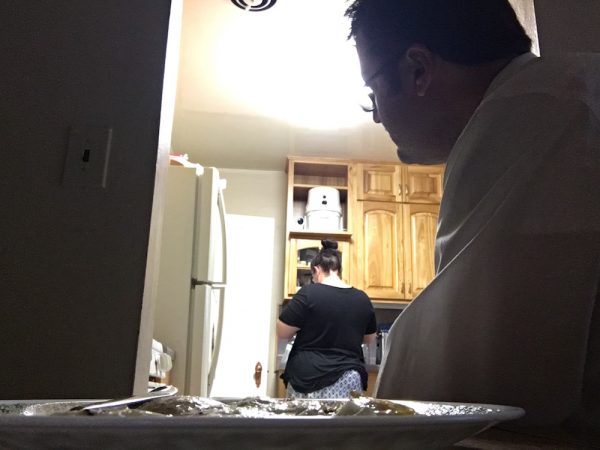
    I had to make my own breakfast.

    But then I met this guy at Taco John’s. He recognized me from Instagram.

    But at home I was still all alone in an empty house.

    But then the kids arrived (along with a lot of help from my Mom, Dad, Mitch, and Jennifer)!

    Magdalena setup her workstation in the basement.

    July

    I took the kids out for hot chocolate at the Root Note.

    The Cobb’s came over for ice cream.

    And we met new friends, the Miller’s, at Ranison’s for ice cream.

    Samuel enjoys building things. We sold the house in Tipton. Suzanne drove back to sign the papers.

    I went on a Dragon Boat race with Jason and Marine Credit Union.

    Because we live close to work now, Suzanne would come bring me lunch and we’d go to the park to eat.

    For my mom’s birthday, we drove back to Indiana to see her. My aunt, Mary, also drove to see her from Missouri.

    But then my Aunt Peggy got sick so I went and visited her before she died.

    August

    The family came together for a meal in Garden City.

    We celebrated my Aunt Peggy’s life.

    See also Peggy’s 50th Birthday Party from August, 2006.

    It was good to get the family together for a time.

    I took a selfie with my two brothers.

    And with my dad.

    Back in La Crosse we went for a walk along the marsh.

    We also walked to the Mississippi River.

    Suzanne continued growing her essential oils business while I continued making t-shirts.

    The kids went on a plane ride around La Crosse.

    They were all very excited.

    The girls were growing up.

    The lights were going out.

    It was a very exciting time.

    September

    In September I went kayaking with Jason.

    I visited my mom in Franklin.

    While I was there I visited my friend, Hans.

    I recreated the Shog logo in Adobe Illustrator and turned it into a t-shirt for me and Samuel to wear.

    Amalia learned how to ride a bike.

    The kids really got into LEGO building.

    And at the end of the summer we finally made it to the beach.

    October

    We went kayaking again. It was getting darker again.

    Jason and I went to Minneapolis to see a graphic designer and tour the city.

    I visited my mom and took a picture of my dad’s bookshelf.

    Suzanne’s aunt Kathy visited us in La Crosse.

    Suzanne and I visited New Glarus Brewery south of Madison.

    Magdalena started swimming and I went to one of her swim meets for the first time.

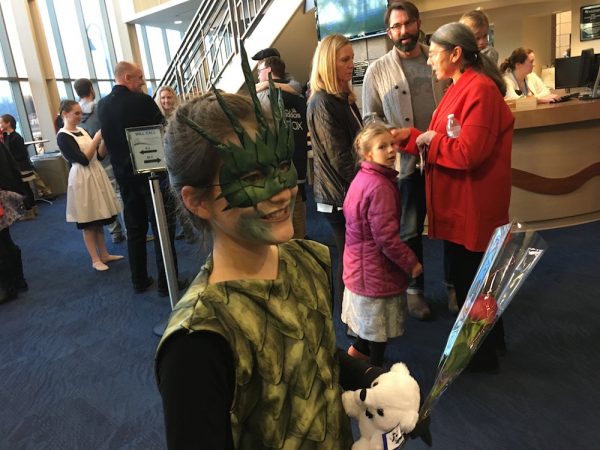
    We dressed up for Halloween.

    November

    I hung out with Hans in Franklin.

    Kevin started a hot cocoa stand.

    Carmina was in a ballet.

    Suzanne and I started going on more dates.

    December

    I visited the Pearl Street Brewery.

    Jason and I made a podcast.

    I kept walking on the trail by work.

    The kids had a good Christmas. I was glad to have everyone in the same place.

    Like Andy Bernard says in the television show, The Office, “I wish there was a way to know you’re in the good ole’ days before you’ve actually left them.” Well, maybe there is. Sometimes you just have to stop and pay attention to the moments you’re in and be thankful for them. They may never happen again.

    Never thought we’d get old, maybe we’re still young
    May we always look back and think it was better than it was
    Maybe these are the moments
    Maybe I’ve been missing what it’s about
    Been scared of the future, thinking about the past
    While missing out on now
    We’ve come so far, I guess I’m proud
    And I ain’t worried about the wrinkles around my smile
    I’ve got some scars, I’ve been around
    I’ve thrown some pain, I’ve seen some things, but I’m here now
    Those good old days -Macklemore

  • What is a Shareasale Datafeed and How Does it Work?

    As an IT and marketing guy I’m often asked to setup new software or help integrate one system with another. This post is about Shareasale datafeeds: what they are and how they are used – from an IT point of view. If you still need professional help, there is a link at the bottom.

    Summary:

    • a datafeed is just a file that affiliates can download that contains links and info on our products
    • once the datafeed is downloaded, affiliates can use it with special widgets on their site
    • some affiliates specifically look for merchants who have a datafeed they can download
    • if the datafeed is visible in our Creatives under Datafeed, then affiliates can download it
    • it is not an integration, it’s only a file that can be updated at any time, overwriting the old file

    What is a Shareasale datafeed?

    The Datafeed functionality allows merchants like us to upload lists of products to their ShareASale account and provides us with the ability to manage multiple stores and product level commissions as additional options. The Datafeed upload completely replaces the existing product listings in our merchant’s account with every upload. Any items not included in the uploaded file will be removed from the product listings. The full overview of the Datafeed specifications can be found at this Shareasale datafeed setup link.

    Why use a datafeed?

    It allows any affiliate that wants to feature a product on their page or through one of Shareasale’s content tools to display our products on their page. Some affiliates specifically look for merchants with datafeeds.


    How long have they been around?

    At least since 2013.

    How do I check to make sure a datafeed is working?

    It appears to be something only an affiliate can see, but the documentation makes it seem like it’s not an integration, it’s just a file that affiliates download and then use as a source file on their sites. So as long as it’s in your creatives and approved, then it’s “working”.

    Why would it not be working or how to update the file?

    We could find that either Shareasale has an issue with the file or the affiliates themselves have an issue with the file once they go to use it. Once we have feedback, we can upload it again at any time and it will overwrite the file that is currently in Shareasale. Here are some common datafeed problems to watch out for and here are some examples of how to create a product datafeed.

    Conclusion

    I didn’t know anything about Shareasale and I didn’t take the time to learn it before, but when I did take the time to learn it and build context I was finally able to know what a datafeed was used for and to tell whether or not the datafeed was setup correctly. This blog post is meant to help others like me who are tasked with setting up a Shareasale datafeed know what a datafeed is and how to check it so I have more context about what they are for and how they are used.

    Professional Affiliate Setup Help

    If you’re reading this you may be a merchant on Shareasale that is looking for an affiliate management company to help you get setup and build a network of affiliates to help market your products. This is not a sponsored post, but I have worked with Priest Willis and his team at Affiliate Mission and have been pleased with their work, their communication, and their integrity. I highly recommend Affiliate Mission for affiliate management and marketing services.

  • How to Write Blog Posts Like General Motors Makes Cars

    General Motors pushes a new car off of their assembly line once every minute, but it takes 2 months in total to make a car. How is that possible and how does that apply to writing blog posts?

    To use another example, the online retailer, The Grommet, launches a new product every day, but it takes them two months to prepare for a single launch. How can both timelines be true?
    A New Way of Thinking about Blogging
    What if I told you that you could publish a new blog post every day by only working one day a week? Would that interest you? What if you didn’t have to do it in one day, but could stretch it out?
    The reason why General Motors and The Grommet and you can do all of these things is because of the power of batching work. Instead of building one thing at a time, each sub-task is batched.
    The idea is that each sub-task can be optimized by not having to get your workspace and mindset setup for working a particular task before putting it away and switching to the next part of the process.
    Playing Devil’s Advocate
    However, there are also studies that have showed that when a human is tasked with making something with multiple steps that in the short run it’s actually faster to finish each item instead of batching.
    There are also advantages to building something to completion if time is a critical element. If you only have a short time to do something, it’s better to get 1 thing done than 1000 unfinished things done.
    However, I have found that there is a difference between physically building something to completion and doing the mental work of creating a blog post due to the cost of task switching between the different steps.
    How to Batch Creating Blog Posts
    Writing a blog post is actually a series of several different, distinct steps:
    1. Determining what to write about – this could include browsing BuzzSumo, news sites, or Google Trends to see what people are interested in; it could also include asking customer support or the social media marketing team for what questions they’ve been getting or seeing online lately
    2. Researching a topic – once you’ve determined what to write about, it’s time to research the topic to see what sort of angle you can bring to the story. You want to add value to the conversation. One way to do that is to find an answer to a problem someone has (where our product is the answer).
    3. Writing the first draft – this process could involve two steps of writing an outline and then going back and filling it in or you could write it all down as fast as possible. The goal of this step is not to write a finished draft, but only to write as much as possible and as quickly as possible.
    4. Editing the first draft – after you’ve given yourself some time, come back and (or have someone else) review your work. Don’t be afraid to delete things you’ve written. Your words are not your babies. Some writers even go so far as to delete their entire first paragraph. Edit for grammar.
    5. Editing the second draft – after some time has passed, go back through and edit for readability and SEO. Make sure it flows in the right order, has the right sub-headers, and has the right amount of keywords and internal and external links, and also make sure it has a call to action.
    6. Finding images to use – I add this as a distinct step because it’s a different mindset and skill to find an image for use with a blog. There are different ways to do this from searching Dropbox, to asking the Marketing department, to taking a photo yourself, to making an image, to stock photos.
    7. Publish the blog post – when a blog post is published, there are several things to consider such as what the title of the blog post is, what URL is used, what the description of the blog post is, what thumbnail is used, what tags are applied, and when the blog post will be published.
    8. Promoting the blog post – this step could be as little as handing off the URL of the new blog post to the social media marketing department or it could be doing the posting yourself to Facebook, Twitter, and Pinterest. You could also make a custom graphic of the post for Instagram.
    9. Repurposing the blog post – [optional] once you have the blog post created, then you can record yourself with some b-roll cut in reading the blog post in your webcam. The resulting video could then be uploaded to YouTube. In this way each blog post could also become a video.
    10. Aggregating the blog post – [optional] once you have a series of blog posts, they can be combined into an ebook and sold on Amazon or used as a giveaway to attract new email subscribers or as a free gift in an email newsletter.
    If you did all of these steps in one day, you would likely be worn out from all of the task switching. But if you could spend one day doing step 1 and found 20 things to write about, that would be one month’s worth of blog posts. On day 2 you would spend all day doing step 2 for all 20 blog posts. By the end of the second week you’d have 20 blog posts published one month in advance and scheduled on social media.


  • 2016 Year in Review

    For as he thinketh in his heart, so is he: Eat and drink, saith he to thee; but his heart is not with thee.” -Proverbs 23:7 KJV

    Grandmommy Funeral
    Grandmommy’s Funeral in Tipton

    In January, my wife’s grandmother, Helen, died and my Grandpa Stauffer started to get sick. My oldest daughter turned 12 and my wife took her to Universal Studios. My mom ended chemo therapy and started radiation treatment. I flew to Orlando for work at GoServicePro.

    Erich at Goservicepro
    Erich at the WWETT16 Show in Indianapolis

    In February, my best friend, Jason Cobb, told me he was moving to Wisconsin. My brother, Mitch, moved into a new house. Skinny and Company offered me full-time employment. On the last day of the month, GoServicePro moved offices and I let them know I was moving on.

    Erich and Jason at the Hi-Fi
    Erich and Jason at the Wakey Wakey Concert in Fountain Square

    In March, my Grandpa Stauffer died. Our family decided to wait to get together. I began working nights at Skinny and Company and went full time March 28th. I started to notice that our kids were starting to grow up.

    daddy-and-amalia-2016

    On the weekends I would take the kids down to the park by the church. The Catholic church had decided to tear down the old church in the background as maintenance costs were too much to repair it.

    samuel-and-kevin-swinging-2016

    Working at Skinny was fun and exciting, but also challenging. We were setting up new systems and so I had to do a lot of learning really quickly. This also uncovered other areas, which needed improvement so there was a lot to do.

    erich-at-skinny-coconut-oil

    My mom’s cancer went into remission and her hair started to grow back. I admired her pursuit of health and her consistently positive attitude through the whole ordeal. Here she is at a band concert:

    moms-hair-2016

    In April I went and visited Jason in Wisconsin. It was a long drive up there and back, but I’m glad I did it. We walked along the Mississippi river and up on top of the bluffs. While I was there my wife told me she was pregnant.

    erich-jason-lacrosse-2016

    Later on that month I went to my first Pacer’s game with Skinny. That’s Mike, Luke, me, and Matt in the picture. Jordan, Landree, and Mike’s wife were also there (she was pregnant, too).

    erichs-first-pacer-game

    Samuel keeps growing up. He really likes going to the park. He’s my little buddy.

    samuel-in-tree-2016

    At the end of April we drove out to Missouri to see Peggy before going on to Dixon for the funeral for Grandpa Stauffer.

    kids-with-peggy-2016

    It was a good way to remember Grandpa.

    grandpa-stauffer-funeral-2016

    Here we are all together in front of the church where my parents got married.

    dad-mom-family-church-2016

    In May I finally setup my own office at Skinny. My brother-in-law, John, got married, and Suzanne and I went to a “Rev Indy” event at the Indianapolis Motor Speedway with Skinny.

    erichs-skinny-office-2016

    By the end of the month, I stopped to smell the roses. I bought a season pass to Eagle Creek Park and would go walking there during lunch kind of like I used to when I worked at Worksmart Systems.

    smell-the-roses

    I took the boys out there, too.

    boys-at-eagle-lake

    We went to the 100th running of the Indianapolis 500. It was my first time going. It was hot.

    race-day-2016

    And we started going to the Silver Beach off Lake Michigan.

    kids-silver-beach-michigan-2016-may

    In June, Jason and I went to Chicago. I’ve been to Chicago with Jason more than any other person (so far). We watched a Cubs game.

    We road bikes to China town to see the famous “Post No Signs” sign. It wasn’t there anymore, but we remembered it.

    In July I thought I was going to Atlanta, but I didn’t get to go so I went to the 100 Acres Woods instead.

    I went and saw my mom playing in the Greenwood band at a Greenwood park. She did good!

    Worlds collided when Hans from GoServicePro went out with me and Mike from Skinny and Company to Amber Indian.

    Kids got some ice cream and started growing up.

    In August I went on a walk around Tipton with Samuel.

    Magdalena left me a note.

    We went and visited Jason and his family in La Crosse, Wisconsin.

    And here’s us at the top of a bluff.

    Here’s the office I had setup for a while at Skinny.

    In September I bought a new bike (the first bike I’ve ever bought myself as an adult). My goal is to ride the Hilly Hundred in 2017.

    Me and Magdalena went for a walk in Carmel on the Monon.

    I took Samuel for ice cream.

    Kevin learned how to ride a bike.

    And I started going to the gym (or at least took at least one picture of myself at a gym).

    In October I told Skinny I was moving on and I had Mike and Matt take this picture with me (thanks to Allison for taking it).

    Carmina had fun seeing Skinny Coconut Oil at grocery stores around Indianapolis. She’s a good spokesperson.

    I went and visited Jason in La Crosse, Wisconsin and made a movie of the trip.

    The Cubs ended up winning the World Series. I had nothing to do with it, but I did visit them (twice).

    Jason and I went for a bike ride on the trails at the top of the bluffs.

    In November I accepted the job at Marine Credit Union in La Crosse, Wisconsin and moved into a hotel.

    I came home for a bit and ate some tacos with Hans.

    It was hard to say goodbye to my family after the weekend.

    Samuel learned how to ride a bike and we went for a ride to the park.

    In December I had a baby. We named her after Helen.

    And my parents flew to Hawaii.

    I bought the kids a PS4.

    My brothers came up for Christmas.

    I took Amalia to the park.

    Here’s to 2016.

  • Things I Want You to Know About Life

    My mom wrote this recently when the power was off. She had, “no WiFi, & time to reflect.”
    Power is off and sensors are beeping. So here goes:

    Things I want you to know about Life

    It can change in an instant.
    Don’t wait to do the things you love.
    Don’t waste time on things that don’t matter.
    Do something new.
    Think about others needs & feelings. Express your gratitude.
    See the beauty all around you.
    Listen more Get off your phone.
    Look up.
    Write personal notes, not texts. Handwritten notes  express your heartfelt appreciation
    Be trustworthy always.
    Build your character & integrity.
    Keep a journal to record the highlights you will forget.
    Good times can be very simple. Enjoy them as they come.
    Watch the sunset.
    Smell the rain.
    Read a child a book.
    Take them for a nature walk.
    And the power is back. Hallelujah.
    Time is too slow for those who wait, too swift for those who fear, too long for those who grieve, too short for those who rejoice, but for those who love, time is eternity. Hours fly, flowers die, new days, new ways, pass by. Love stays. —a sundial
    Enjoy life!
  • The Acceleration of Artificial Intelligence

    Sometime over the last 20 years artificial intelligence has gone from something we laughed about and feared in movies to something that people are now devoting their lives to and view it as a salvation for (or the destruction of) mankind.

    Stock photo representing artificial intelligence by Adobe.
    Stock photo representing artificial intelligence by Adobe.

    Tim Urban at Wait but Why has already written a tome on “The AI Revolution” (Part 1 and 2), which is a very good primer on AI. For a slightly longer read, consider Nick Bostrom’s Superintelligence: Paths, Dangers, Strategies. This post is neither.

    This post is meant to describe the acceleration of artificial intelligence development as seen through various news updates and published papers. In the process I hope to convey to you, the reader, how close we are to artificial general intelligence (AGI).

    What is Artificial Intelligence?

    For this post, we are limiting the topic to AGI, which Tim Urban describes as, “a computer that is as smart as a human across the board—a machine that can perform any intellectual task that a human being can.” The problem is that we may not have a good way of quantifying AGI. It’s as if once we’ve achieved any new threshold in AI, humans tend to move the bar higher.

    Once there is a program in existence that does the job, you are inclined to think it’s merely a formula and that isn’t thinking. The very success of me producing a program which exhibits thinking causes you to deny that that can be thinking.” -Dr. Richard W. Hamming (1915-1998) in a lecture from “The Art of Doing Science and Engineering: Learning to Learn: Artificial Intelligence – Part I” (April 7, 1995)

    Peter H. Diamandis and Steven Kotler echo this sentiment in their book, Bold: How to Go Big, Create Wealth and Impact the World, which covers artificial intelligence as “exponential technology”. It’s not just this human bias that hides artificial intelligence’s acceleration, sometimes AI gets written about by other names such as “natural computing”:

    Researchers at UCLA and the National Institute for Materials Science in Japan have developed a method to fabricate a self-organized complex device called an atomic switch network that is in many ways similar to a brain or other natural or cognitive computing device…The device we have created is capable of rapidly generating self-organization in a small chip with high speed…Experiments demonstrated that the atomic switch network exhibits emergent behavior…has the potential to process information at very high rates…We plan to move towards a hybrid morphic system using the best of conventional computation with our brain-like device capabilities…This would be a radical step in the real development of AI.” –Scientists develop atomic-scale hardware to implement natural computing, May 13, 2015 by Lisa Zyga

    “Emergent behavior” is when a number of simple entities (agents) operate in an environment, forming more complex behaviors as a collective. This is similar to cellular automata that Stephan Wolfram describes in A New Kind of Science.

    “RMIT University researchers have mimicked the way the human brain processes information with the development of an electronic long-term memory cell. Researchers at the MicroNano Research Facility (MNRF) have built the one of the world’s first electronic multi-state memory cell which mirrors the brain’s ability to simultaneously process and store multiple strands of information. The development brings them closer to imitating key electronic aspects of the human brain — a vital step towards creating a bionic brain.” –Nano memory cell can mimic the brain’s long-term memory, May 12, 2015

    Sometimes, narrow AI technology is created that works in ways that the creator did not intend or does not understand. “He can’t really explain all the reasons it does what it does. It’s started making decisions on its own,” which is a quote from George Hotz in “The First Person to Hack the iPhone Built a Self-Driving Car. In His Garage; George Hotz is taking on Google and Tesla by himself” by Ashlee Vance.

    “He’d devoured the cutting-edge AI research and decided the technology wasn’t that hard to master. Hotz took a job at Vicarious, a highflying AI startup, in January to get a firsthand look at the top work in the field, and this confirmed his suspicions. “I understand the state-of-the-art papers,” he says. “The math is simple. For the first time in my life, I’m like, ‘I know everything there is to know.’” -George Hotz

    The Economics of Artificial Intelligence

    And then there is the economic aspect of AI. More narrow AI such as those used in driverless cars may have the need to buy gas (or electricity) and get maintenance. It can even make money for it’s owner by making deliveries or driving people around.

    The self-driving car then, calculating it has approximately 3.5 hours before it will be required by one of its owners again, logs in to Uber and makes itself available for a 3-hour block as a self-driving resource. It is immediately called out to a pickup, and after 3 hours has earned $180 in fees, which it puts away in its wallet.” -“The Death of Bank Products has been greatly under-exaggerated” by Brett King, an excerpt from the book, Augmented: Life in the Smart Lane.

    What happens when AI starts making money, needs it’s own bank account and credit cards, and needs to be able to make transactions on it’s own? With artificial intelligence, that future is sooner than you might think.

    It’s theoretically possible to write an autonomous self-funded application on Ethereum that earns money to pay for its own execution, or rather its own existence. It might create value by enabling new kinds of markets, for example. Artificial intelligence might help optimize the value it delivers to ensure its own survival. In this case, it’s not just the network that’s unstoppable, but an autonomous agent operating within the network. Cue Skynet joke.” -“Ethereum: Rise of the World Computer” by Rick Seeger.

    Skynet may not be a joke. The United States military is increasingly looking into how artificial intelligence can help supplement drones and fighter jets on the battlefield.

    One new project … is called Avatar, and calls for the Pentagon to pair high-tech “fifth-generation” fighter jets like the F-22 Raptor and F-35 Joint Strike Fighter with unmanned versions of older jets like the F-16 Fighting Falcon or F/A-18 Hornet, which would be flown without a pilot for the first time. The Avatar effort was previously called Skyborg by SCO and is known as “the Loyal Wingman” concept in the Air Force, Roper said. The program will require unmanned fighters to act with enough autonomy that the pilot in the manned jet doesn’t have to direct them all the time.” – by Dan Lamothe

    Why are Smart People So Afraid of AI?

    You may have read that Elon Musk is weary of an AGI becoming an artificial super intelligence, which according to Nick Bostrom, could happen minutes to weeks after AGI is established. Elon Musk has read Nick Bostrom’s work and it’s part of why he’s helped create Open AI, a collaborative effort to create an open-source AI.

    The hope with Open AI is to reduce the risk that one person, company, or country could create and control an AI that could cause unintended (or intended) negative consequences. But what types of negative consequences?

    The Paperclip Maximizer

    The “paperclip maximizer” is a thought experiment showing how an artificial general intelligence, even one designed competently and without malice, could ultimately destroy humanity. The thought experiment shows that AIs with apparently innocuous values could pose an existential threat.

    An extremely powerful optimizer (a highly intelligent agent) could seek goals that are completely alien to ours (as humans), and as a side-effect destroy us by consuming resources essential to our survival. I thought it would have been better to use red staplers, but that’s just me. 🙂

    The Rise of Artificial Intelligence

    When I was 14 I called to get a ‘free’ magazine subscription in the mail. The operator asked me what I was interested in and I said ‘artificial intelligence’. Immediately, an unknown man on the line bust out laughing, but quickly contained himself. No one is laughing now.

  • Virtual Reality’s Mainstream Moment: Ready Player One

    Ready Player One: VR Goes Mainstream
    Stock photo from Adobe not related to book or movie by Ernest Cline.

    I remember it like it was yesterday: March 28, 2015, the day Ready Player One and its corresponding virtual reality (VR) game, The Oasis, were simultaneously released.

    While it is true that Avatar 2 released its own VR game months earlier in 2007 it wasn’t until Ready Player One’s “The Oasis” that VR games were considered mainstream.

    The Platform Wars

    Just like in the early days of gaming consoles like Nintendo, SEGA, and Atari, today’s VR landscape is equally segmented and even more fractured because of PCs and mobile devices.

    In the beginning, relatively cheap options like Google Cardboard or View-Master were under $20 while devices from Oculus cost $800 and required a $300 graphics card in a PC.

    Adobe stock photo of cardboard VR glasses to play games in 3D.
    Adobe stock photo of cardboard VR glasses to play games in 3D.

    The Adoption Curve

    Early adopters eagerly purchased any new technology no matter the cost, but for mass adoption the price point of a VR gaming unit had to fall under $400. That happened in March of 2018.

    Samsung, Facebook’s Oculus, and Microsoft all had solutions in the mix, but it was Nintendo who leapfrogged them all with a device that used low-power, cell phone processors and a simple headset device we all know as the Nintendo VoyR.

    The Network Effect

    The VoyR debuted with Mario Planet, but it was The Oasis that was a breakout hit. Although the elements of Mario Planet were familiar (Mario Cart anyone?), it was the built in friendship and messaging abilities that Nintendo built into the game that truly allowed it to prosper. Steam, Battle.net, Sony PSN, and Xbox Live all quickly followed suit.

    But VR wasn’t limited to gaming. Because of the success of Nintendo and other platforms, Facebook was now a place I could go to talk to my friends in 3D and group texts in iMessage could now be done via avatars with Apple’s new VR headset. Even Google was back in the game with Glass VR, Nexus VR, and Chrome VR.

    The Internet of Things

    VR applications opened up a whole new use for Internet connected devices. Apple Car drivers could now virtually do a walk through of their house to look to see if they left something or see who is at the front door when the doorbell rings.

    2018 also saw UBER “drivers” designated to serve a pseudo-AI role of making sure self-driving car passengers feel comfortable in much the same way self-checkout cashiers used to help people when they got stuck checking out some weird item.

    Augmented Reality

    Not all VR tech involved a fully immersive environment. Special “see through” versions from Warby Parker and View-Master allowed an entirely new market of face recognition CRM software for LinkedIn and Minecraft skins for your home.

    But maybe the biggest surprise was the return of the local arcade where specialized VR and augmented reality (AR) environments could be setup for bowling on the moon or playing real-life Mario Kart. But by far Dance Dance Revolution is the most fun.

    First World Problems

    The worst part about VR is taking the headset off and readjusting to the real world to do things like eat and use the restroom. That’s why VR headset makers quickly moved to create hybrid VR/AR headsets that let you see “both worlds” without having to remove the mask.

    And like in Ready Player One, sometimes people hide behind the mask and you really don’t know how someone looks in real life. But maybe that’s okay. Because you can’t judge a book by its cover and maybe you shouldn’t judge a person by the way they look in real life either.

  • Will Ready Player One Ever Become a Real Game?

    Ready Player One Game

    Ready Player One is a book written by Ernest Cline in 2011. On March 30, 2018, the feature length film will debut in movie theaters, but will there ever be a real virtual reality game like the one found in Ready Player One?

    In the novel, The OASIS is a virtual universe, containing thousands of worlds. It functions both as an Massively Multiplayer Online Role Playing Game (MMORPG) and as a virtual society, complete with OASIS currency.

    Imaging if Facebook came out with an Oculus-Enabled Facebook where people could meet, interact, learn, work, and play online instead of in real life (IRL). That’s basically what The OASIS is, but could it ever actually be made?

    Simulation games from stock trading to The Sims have been popular ever since computers became popular, but so far Virtual Reality (VR) has been out of the reach of what technology could handle. But that may be changing.

    Computers are getting smaller and faster every few years, but also there has been increased effort in understanding how the brain interprets visual information which is critical for how VR environments work.

    Hardware and software is being developed that will allow intensely real-like environments that VR provides. The brain is incredibly adaptable and can easily assimilate into an environment that is initially foreign.

    People have long been fascinated with existential ideas about what makes reality real and what it means to live inside a simulation. As we move closer to this new world of VR games and lifestyle, we’re about to find out.