This morning clarified something I’ve been circling for years but never named plainly: I have optimized for system impact, not personal authority.
I’m very good at building, fixing, and stabilizing systems. I improve organizations, help leaders think more clearly, and quietly make things work. But I’ve done this while standing adjacent to power instead of occupying it:
Advisor instead of owner
Architect instead of authority
Reliable #2 energy instead of explicit responsibility with upside
That pattern used to make sense, but it is no longer congruent with who I am.
Earlier in life, staying adjacent gave me flexibility, safety, and moral insulation. I could contribute without exposure. I could help without risking visible failure. I could preserve an identity built around service, intelligence, and restraint. It worked—until it didn’t.
What’s changed is not my capacity, but the gap between who I am and how I’m positioned. That gap is now emotionally expensive. It shows up as frustration, quiet resentment, and the sense that I’m under-leveraged. At this stage, capability without outcomes doesn’t read as humility anymore—it reads as incongruence.
The hardest realization is that not winning has been an emotional strategy. Losing—or at least not fully claiming victory—kept me morally clean and relationally safe. But the cost was real: borrowed authority, capped upside, and leadership that I donate instead of own.
What once looked virtuous is now avoidance wearing a service costume.
Here’s the reframe that landed hardest for me: for someone like me, winning is load-bearing.
When capable people refuse authority, less capable systems stay in charge and entropy increases. Responsibility without power becomes the norm.
Winning, rightly defined, isn’t dominance or ego—it’s stewardship. It’s aligning authority with responsibility so systems actually stabilize (instead of limping along).
This internal shift then let me connect directly to recent geographic and social friction. A regional analysis made it obvious to me that I’m trying to regulate myself in environments that don’t reward execution or ownership. La Crosse and similar Driftless towns prioritize values, relationships, and moral signaling over outcomes. That’s not wrong—but it’s costly for someone wired to build, ship, and take responsibility.
Madison and Rochester stand out not because they’re glamorous, but because there competence carries weight. Execution is expected. Outcomes matter. Accountability is normal. The insight isn’t “I need to move tomorrow,” but that I need periodic immersion in consequence-dense environments to recalibrate my nervous system and expectations. Without that, resentment builds and clarity erodes.
The through-line is uncomfortable but clean: this isn’t a motivation problem. It’s an identity lag. I was still operating with rules designed for an earlier season—rules that prioritize safety and flexibility—while my calling now requires ownership, visibility, and measurable outcomes.
At this point, refusing to win isn’t neutral. It quietly undermines authority, credibility, and self-trust. Winning isn’t about ego anymore. It’s about accepting stewardship of the systems I’m already capable of carrying.
I’m starting to see the shape of the season I’m in more clearly now. It’s quieter than I expected, slower than I wanted, and far more formative than I realized at the time.
A lot of what I’ve been wrestling with isn’t about failure, or even missed opportunities. It’s about tempo, identity, and ownership.
I’ve been carrying an unspoken fear that life is happening somewhere else—that the real future is in California, in offices full of important people, in rooms where decisions get made. That if I’m not physically there, I’m slowly becoming irrelevant. That one day I’ll wake up older and realize I waited too long to matter.
But when I look honestly, that fear isn’t rooted in truth. It’s rooted in a narrow story of what “serious work” is supposed to look like.
I didn’t get trapped near my kids. I chose to stay present. And the resentment I sometimes feel isn’t because the choice was wrong—it’s because I don’t always re-own it consciously. When I forget that I chose this path because it aligns with my values, my mind rewrites the story into one where something was taken from me. That’s the seed of bitterness, and I don’t want it growing.
At the same time, I can see that I’ve been conflating visibility with location, and approval with progress. I’ve been too focused on where my body isn’t, instead of where my thinking could be.
What’s becoming clearer is that my real work right now is formation, not validation.
I’m learning that moving fast socially or emotionally often backfires—not because I’m dangerous or wrong, but because humans process safety and effort on delayed timelines. Politeness doesn’t mean alignment. Warmth doesn’t mean consent. And by the time discomfort surfaces, it’s already too late to correct. That doesn’t make me defective; it means the lever is earlier to see, not later to explain.
This applies far beyond dating. It applies to life.
I’m also seeing how much unused energy I’ve been carrying—how excess capacity with no clear direction turns into rumination, longing, scrolling, and obsession. When I’m physically exhausted, mentally engaged, and creatively focused, those patterns quiet down. Direction dissolves obsession. Creation beats distraction.
Masculinity, for me, isn’t about force or dominance. It’s about restraint, discipline, and dignity under stress. About not outsourcing identity to approval. About metabolizing anger into strength instead of letting it rot into resentment. Sometimes withdrawal isn’t avoidance—it’s wisdom.
There’s something deeply grounding about realizing that this season isn’t a punishment or a stall. It’s groundwork.
Jesus didn’t chase acceptance. He moved with clarity, withdrew without bitterness, and measured success by obedience, not outcome. “Shake the dust off” isn’t about contempt—it’s about refusing to carry residue forward.
I can see now that framing life as “later” is a trap. If I tell myself my real life starts after the kids are grown, or after some imagined permission is granted, I’m training myself to wait. And waiting corrodes the nervous system. Parallel advancement—not deferred living—is the way through.
I don’t need to be everywhere. I need to be visible where it counts. Ideas compound. Synthesis matures. Presence matters more than proximity.
For most of my adult life, I’ve been addicted to a very specific dopamine hit: the thrill of getting back to zero, but going forward I want to go from zero to one.
Minus World
In the past, I would start projects, relationships, businesses—pour energy into them until they showed promise—then abandon them just as they entered a phase of maintenance and growth. I’d then start something new, feel the rush of novelty, and repeat the cycle.
In business: I’d launch initiatives, see early traction, then pivot to the next shiny idea before harvesting the first one.
In relationships: I’d date someone, feel the intensity of new connection, then sabotage it when it required sustained commitment and vulnerability.
In creative work: I’d start blogs, YouTube channels, music projects—each with genuine enthusiasm—only to let them go dormant when the “messy middle” set in.
I wasn’t failing. I was resetting. And resetting felt like progress because it gave me the emotional payoff of recovery without the sustained effort of growth, but I wasn’t actually going anywhere.
This pattern became undeniable in 2023 when a long-term relationship ended—not because it had to, but because I couldn’t stay. We dated for a year and a half (the longest relationship I’d had outside of my 18-year marriage) and when she said she just wanted to be friends, it wasn’t just a breakup. It was an identity death.
Because the narrative I’d been living—the one where I find a wife, build a home together, and create a new life—ended mid-sentence, I found myself in this “liminal space” between who I thought I was going to be and who I actually was.
In April of 2025, I drew a hard boundary. That version of me—the one seeking confirmation through relationships, building my identity around someone else’s yes or no—was no longer allowed to run my future.
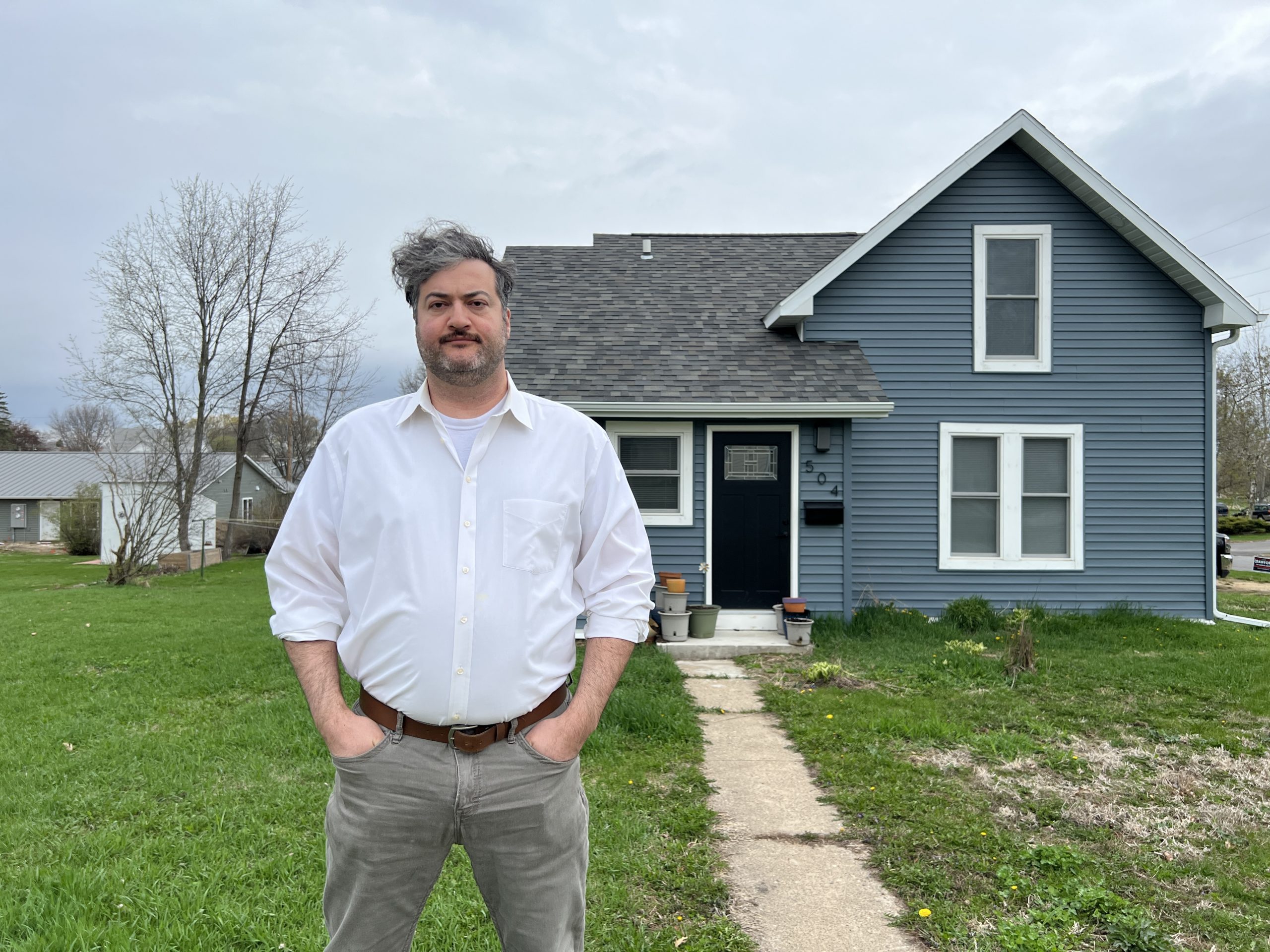
I moved from La Crosse, Wisconsin to Viroqua, Wisconsin—a small town an hour south—into what I call “the blue house with white shutters.” Not because it was the house I wanted to own, but because I needed physical distance from the old patterns. I needed a space where I could hear myself again.
This past year has been about learning a new way: to stay, to maintain, to leverage what already works instead of constantly starting over.
And in 2025, for the first time, I practiced staying.
What I Built in 2025
In previous years, I would have abandoned half of this list to chase something new. This year, I practiced staying.
Creative Output
I played my first open mic. On January 18, 2025, I performed at the Listening Room in Viroqua. I’ve been writing music for years, recording albums in my bedroom, posting them on YouTube where almost no one listens. But I’d never performed live. Standing in front of people with just my guitar and my voice—no edits, no retakes—was terrifying. And I did it.
I published two books. One fiction, one non-fiction. I’ve started many books over the years, but this year, I finished two and published them on Amazon – not because I think they’ll be bestsellers – but because finishing them worked a muscle I needed to strengthen.
I released two musical albums on YouTube – home recordings, but the point wasn’t fame – the point was: I made the work and I shared it. I didn’t let perfectionism or audience size stop me from completing what I started.
I continued vlogging. I’ve been making them since June of 2019. These aren’t just content. They’re a visual archive for my six kids and I to look back on years from now. Some things aren’t for algorithms. These are for legacy.
My two oldest are in college and don’t see me as much anymore. The two middle boys are in high school—one texts me daily on TikTok to keep the streak going. The two youngest girls and my younger son hang out with me on weekends. As they age, I’m transitioning from being their “father” in the protective, providing sense to being their friend and guide. The vlog is part of that—showing them not just who I was when they were young, but who I was becoming in the years they might not fully remember.
Professional Momentum
Another year at Anatta. I work as a business analyst at an ecommerce consultancy, leading discovery and delivery for enterprise Shopify Plus replatforms—the kind with 3 million+ SKUs, complex integrations, and high-stakes clients. I serve as the primary liaison between C-suite stakeholders and cross-functional teams of designers, developers, and QA. I document functional and technical requirements, co-create solution designs, oversee sprint planning, and facilitate UAT.
This was my second year there. In the past, I would have gotten restless and looked for the next thing. The title “business analyst” would have felt limiting. I would have convinced myself I’d learned all I could and needed a bigger stage. But this year, I stayed. And in staying, I deepened my expertise, mentored junior analysts, and became the person others come to for the hard problems—the ambiguous client situations, the complex integrations, the politically sensitive stakeholder conversations.
I also started recognizing something important about the nature of the work I was actually doing.
When a client with 500,000 products needed a marketing feed that wouldn’t require reprocessing all SKUs every time a single price changed, I wasn’t just “making a feed.” I was designing a sustainable operational mechanism—exploring API delta approaches, segmentation by category, building a system that could scale without breaking. That’s not requirements gathering. That’s system stabilization.
When we ran enterprise Shopify go-lives, I built and maintained the go-live checklists across design, configuration, marketing integrations, privacy compliance, SEO, analytics—using them as an operating system to reduce chaos and missed dependencies. Not just documenting what needed to happen, but creating the control structure that made it repeatable across projects. That’s launch governance.
On a project integrating Shopify and WooCommerce with Business Central OMS, Salsify, complex bundle logic, and multi-warehouse fulfillment, I drove standardization of definitions and flows so partner integrations could test and validate consistently. Fewer edge-case fires. More predictable throughput. That’s operational stabilization.
I consistently operated as the bridge between C-suite stakeholders and delivery teams—translating executive intent into requirements, facilitating discovery sessions, aligning designers/developers/QA around shared understanding, managing UAT readiness. I coordinated external vendors getting testing access, understanding validation steps, aligning milestones to staggered go-live dates.
For one enterprise client, I captured and organized a deeply complex integration ecosystem—NetSuite, Akeneo, Workato, Algolia, Segment, Klaviyo, Avalara, ShipHawk, and more—into a shared understanding the team could actually act on, then drove systematic follow-up question development. That’s not documentation. That’s coordination of complexity into an executable plan.
I created implementation-ready tickets for wholesale versus allopathic navigation and journey changes, including flow logic for “Request Samples” and where data lands in the system. I made structural product decisions: who sees what, when, and how requests get operationalized.
And across multiple clients, I kept pushing the same thesis: execution fails because structure fails first. Not tools. Not platforms. Structure. Roles, incentives, decision-making frameworks. I was choosing organizational and operating-model design as the primary lever, not just technology swaps.
This is when I realized: I’ve been doing COO-level work just without the title: systems thinking across tech, people, and process; cross-functional coordination; and internal change initiatives. I’ve been acting as a bridge between business strategy and technical execution. The skills are there. I just don’t have the title…yet. But staying at Anatta gives me something crucial: stable income, enterprise-level case studies, and health insurance.
Another year running Market Jack. My independent ecommerce consulting company. I’ve consulting on the side for years, but I used to treat it like a hobby—something I’d work on when I felt like it, then neglect when something shinier appeared. I’d take on clients, deliver good work, then let the pipeline dry up because I was chasing the next idea instead of serving the clients I already had.
This year, I treated it like a business. I served my existing clients well. I didn’t chase new ventures. I just showed up consistently for what already worked. And something shifted: my existing clients started referring me to others. The work became steadier, not because I was hustling harder, but because I was staying longer and doing better work for the people who already trusted me.
Framework Development
I created the 4-Year U. framework. This is my life-architecture system—a way of thinking about long-term goals, seasonal rhythms, and sustainable growth without burnout. I’ve been living by this framework since my divorce, using it to rebuild after that identity collapse in 2020, but in 2025 I formalized it. I wrote it down. I structured it. I made it teachable.
The 4-Year U. isn’t a productivity system or a motivational program. It’s life architecture. It’s designed to help people make progress on long-term goals without burning out, restarting, or losing hope. It highlights how to leverage over time—something I was teaching others but only inconsistently doing myself.
The framework is built on four-year arcs (not one-year sprints or ten-year dreams), seasonal rhythms (winter for rest, spring for preparation, summer for execution, fall for harvest), and the idea that life unfolds best when you align with God’s design of cyclical growth instead of forcing linear urgency.
Ironically, I built a system about leverage and staying power while still struggling to do it myself. But that’s the work of 2025—practicing what I’ve been preaching.
I published my first two digital products for 4-Year U. A Life Planning Guide and a Debt Reset Planner. Small products, humble sales. I’m not making significant money from them yet, and that’s okay. The goal right now isn’t revenue—it’s practice. Practice creating page-by-page instead of launching big and then abandoning. Practice maintaining something over time. Practice building 0 to 1 instead of constantly resetting to zero.
Each product took weeks to create. Not because they’re complicated, but because I worked on them slowly, deliberately, consistently. A page here. A section there. Building the muscle of staying with something through the boring middle when the novelty has worn off and the finish line still feels far away.
And you know what? It worked. I finished them. I published them. They exist in the world now, generating small amounts of revenue and helping a few people structure their lives better. That’s not nothing. That’s everything.
The Themes That Emerged
As I look back on 2025, seven themes stand out—not as goals I set, but as patterns that revealed themselves through the work of staying.
1. Integration and Synergy
For years, I’ve kept parts of myself separate. Professional Erich (the business analyst, the consultant) stayed in one box. Personal Erich (the musician, the writer, the father) stayed in another. Creative Erich, spiritual Erich, broken Erich—all in separate compartments.
This year, I started letting them integrate. My professional work in ecommerce—helping companies transition from chaos to structure, from reactive to strategic, from short-term sprints to long-term arcs—is the same work I’ve been doing in my personal life. The 4-Year U. framework I built to help me rebuild after identity collapse is the same framework that helps companies build sustainably.
I’m not separate people. I’m one person with one way of seeing the world. And in 2025, I started letting that coherence show.
2. Leverage Over Novelty
The dopamine hit of “new” is seductive. New relationship, new business idea, new creative project. But novelty doesn’t build anything. It just resets the clock.
This year, I practiced a different kind of dopamine: the satisfaction of small, incremental improvements over time. In Minecraft, I built the same world day after day instead of starting new worlds. In the 4-Year U., I created products page-by-page instead of launching a flashy website. In my social media channels, I posted simple videos to existing accounts instead of starting new ones.
I trained my brain to get the reward from maintaining instead of starting. And I discovered something: maintenance is leverage. Consistency compounds. Staying with something long enough to see it mature creates value that restarting never can.
3. Long Arcs, Short Actions
The 4-Year U. philosophy is built on this: life unfolds best in long arcs, not short sprints. Not one-year goals that burn you out. Not ten-year dreams so distant they feel meaningless. Four-year cycles that mirror natural seasons—long enough to build something real, short enough to stay connected to the outcome.
But long arcs only work if you take short actions consistently. Daily habits. Weekly rhythms. Monthly check-ins. Small steps that don’t feel dramatic but accumulate into transformation over time.
This year, I lived this. Not just taught it—lived it. Paid down debt month by month. Worked on digital products page by page. Attended men’s group week by week. None of it felt heroic. All of it mattered.
4. Identity-Work Alignment
I used to think my work was just how I paid bills. My real self—the creative, the thinker, the builder—existed somewhere outside of business hours.
But this year I realized: my professional work is who I am. I help companies and clients build structure from ambiguity. I guide them through transformation. I mentor others. I see patterns across systems—people, process, technology—and help integrate them.
That’s not separate from my personal identity as a “sage-builder,” a guide for others. It’s the same thing. And when I stopped trying to keep them separate, both got stronger.
5. Revenue Up, Expenses Down
I’m building what I call “The Storehouse”—a financial foundation that creates optionality for whatever comes next. Whether that’s marriage, a family crisis, helping my kids, or seizing a professional opportunity, I want to be ready.
Right now, I earn a stable income from Anatta and supplement it with independent consulting through Market Jack. I have monthly obligations including child support and housing costs, plus outstanding debt that I’m systematically paying down.
My goal for 2026: significantly grow my Market Jack revenue, eliminate my highest-interest debt, and reduce my housing costs. By the end of 2027, I want to be debt-free except for student loans. By the end of 2028, I want to be positioned to buy a house.
This isn’t about getting rich. It’s about building breathing room—financial and psychological—so I can say yes to the right opportunities instead of being constrained by monthly obligations.
6. Contextual Work
Not all work serves the same purpose. Some work is for income. Some is for regulation. Some is for legacy. Some is for learning.
I used to feel guilty about my multiple creative channels—vlogging, music, ASMR breakfast videos, chess recordings, comedy experiments. I thought I should “focus” and pick one. But this year I realized: they serve different needs. The vlog is legacy for my kids. Music is emotional regulation. ASMR breakfast is a way to feel less alone. Chess is strategic practice.
None of them need to “become something.” They’re already serving their purpose.
The work that needs to grow and leverage is Market Jack and the 4-Year U.—those are my professional identity. Everything else can remain what it is: practices that keep me regulated, creative, and human.
7. Emotional Regulation in Work and Personal Life
Personal growth and professional growth are the same thing.
When I’m emotionally dysregulated—anxious, resentful, obsessing over a past relationship—my work suffers. When I’m financially stressed, my relationships suffer. When I’m neglecting my body, my creativity dries up.
This year, I started treating emotional regulation as infrastructure, not luxury. Daily prayer and Bible reading. Regular exercise. Intentional time with my kids. Therapy when needed. Boundaries around dating. Practices that keep me grounded.
And I noticed: when I’m regulated internally, everything external flows better. Clients trust me more. My work improves. My creativity returns. Emotional regulation isn’t separate from success. It’s foundational to it.
2026: Leverage and Activation
My theme for 2026 is Leverage and Activation.
In 2025, I learned to stay. In 2026, I activate what I’ve built.
Here’s what that means practically:
Professionally:
Maintain Anatta as my stable financial base (steady income, health insurance, enterprise experience)
Significantly grow Market Jack by doubling down on existing skills and network—no new ventures, just better execution on what already works
Position Market Jack as fractional COO services for ecommerce companies, built on 4-Year U. principles of sustainable growth
Create or acquire one income-producing asset that generates passive income by the end of the year
Financially:
Eliminate highest-interest debt by December 31, 2026
Reduce housing costs significantly when my current lease ends in April 2026
Build an emergency fund
Start saving for a house down payment
Physically:
Achieve and maintain a measurable standard of physical capability
Become physically reliable—a fit body that supports long-term goals, not just short-term aesthetics
Relationally:
Operate from clarity and integrity in all relationships
Show up socially as a grounded man with a full life, not someone auditioning for rescue
Create intentional memories with my six kids on our regular custody schedule
Remain open to a serious relationship, but only pursue depth when my foundation is solid
Spiritually:
Practice daily alignment practices that strengthen attention, discipline, and peace
Live from order and obedience—not performance or shame, but genuine alignment with what I believe
Creatively:
Continue vlogging and posting for creative reasons, not metrics
Look for opportunities to create content that supports my identity or financial goals (Market Jack, 4-Year U.)
Let other creative channels remain regulatory practices without pressure to monetize
Building 10 Feet Tall
For years, I’ve struggled with a tension: I have the desire to build something “10 feet tall” instead of “10 things 1 foot tall.” But I’ve been afraid to choose one thing to focus on—caught between the dopamine trap of novelty and the paralysis of not wanting to choose wrong.
This year, I’m making a choice.
My one thing is: Fractional COO services for ecommerce companies, built on 4-Year U. principles of sustainable growth.
This integrates everything:
My 20 years of ecommerce, business analysis, and operations experience
My 4-Year U. framework for long-arc thinking
My identity as a sage-builder who helps others build what they couldn’t build alone
My financial goal of growing Market Jack into a sustainable primary income source
Everything else—the vlog, the music, the ASMR breakfast videos, the chess recordings, the comedy experiments—remains as regulatory practice. I’m not abandoning them. I’m just not asking them to become something they’re not meant to be.
This is what integration looks like. Not forcing everything into one brand, but knowing what serves which purpose and letting each thing be what it is.
The Long View: Beyond 2026
This is a four-year arc. Not a one-year sprint.
By the end of 2027:
Significantly reduced debt burden
Market Jack consistently generating substantial supplemental income
Positioned for a COO role (either fractional or full-time)
Moved back to La Crosse area, closer to my kids
By the end of 2028:
Remaining debt paid off
Down payment saved, ready to buy a house
Financially and emotionally ready for marriage if the right person appears
Living the blue house with white shutters vision—not the literal house yet, but the identity it represents
By the mid-2030s:
Debt-free, house-owning, with the option to scale Market Jack, take a full-time COO role, or build something new from a place of stability instead of desperation
This isn’t about rushing. It’s about building properly. One season at a time. One year at a time. One day at a time.
A Question for You
If you’ve read this far, thank you. Seriously. This is long, personal, and probably more introspective than most year-end posts you’ll read.
But I’m curious: What arcs or patterns do you see in your own life?
Are you addicted to starting over instead of building forward?
Are you keeping parts of yourself in separate boxes instead of integrating them?
Are you chasing novelty instead of leveraging what already works?
Are you rushing to the next chapter to avoid sitting in the liminal space?
I don’t have all the answers. I’m figuring this out in real time, same as you. But I do know this: the work of staying—of maintaining, of leveraging, of building 0 to 1 instead of constantly resetting to zero—is harder than it looks. And more rewarding than I ever imagined.
If this resonates with you and you want to follow along:
For ecommerce consulting or fractional COO services:marketjack.com
For life-architecture frameworks and digital products:4yearu.com
For personal updates, vlogs, and reflections: Subscribe to this blog
Here’s to 2026. Not as a year of reinvention, but as a year of leverage and activation.
Recently, I asked ChatGPT to do something different.
I didn’t want tips or comfort. I didn’t want affirmation. I wanted confrontation. So I gave it a prompt:
“Act like a no-fluff transformational coach. Help me get brutally clear about who the best version of me really is—not some fantasy, but the grounded, embodied version of me that shows up in all areas of life with purpose and power. Ask me these questions one at a time. Press me. Challenge my excuses. Hold up the mirror. I want clarity, not comfort.”
And it did.
What followed was not a back-and-forth. It was a mirror being held up to my face and a fire being lit under my feet.
The process began with relationships. I told ChatGPT I wanted to live shame-free, confident, self-assured, and intentional in my romantic life, my family, and my friendships. But that wasn’t enough. It pressed:
“What does that look like? What does the movie scene look like?”
So I described it:
I tell my partner, “That was a long time ago—I don’t do that anymore. I’m focused on the future.”
When family crosses a boundary, I say, “Thank you, but I don’t accept that. I know who I am.”
When a friend repeats the same cycle, I say, “This is what you want. This is what you’ve practiced. This is what you got.”
That was just the start.
Then we moved into finances.
I told it I believed money flows to me because I provide value. I budget. I plan. I build systems and income streams. I’m not just hustling—I’m stewarding.
But again, it pressed:
“What are the receipts? What would the best version of you do with money?”
I laid it out:
I’ve built multiple income streams.
I net around $10k/month.
I give to church and causes.
I automate investments.
And yet—I had no runway. That’s where the gap was.
Then came health.
I said I walk 10,000 steps a day. I train. I eat high protein, low carb. I pray, breathe, and reflect when I’m anxious. But when chaos hits?
“I break my diet. Then my boundaries. Then my fitness.”
That was a gut punch. But it was real. And that truth mattered.
It reminded me: if I want to perform under pressure, I must strain when things are calm. I’m training for purpose, not performance. Fitness is spiritual.
And then we got to purpose.
I explained that I build systems that make things more efficient and help people. I create communities. I write. I consult. I make content. But ChatGPT pressed again:
“What kingdom dies if you stay silent?”
That shook me.
I realized: I help business owners, ecommerce leaders, and people stuck in careers or relationships. I create spaces where people feel seen and heard. I’m the tide that raises all boats.
And then came the dagger:
“Where are you playing small?”
I confessed: I dilute my message. I play around on social media, hiding the real work behind entertainment. I spread myself across channels to stay safe, not great. I’ve been fragmenting my power.
From there, I declared what I refuse to do anymore:
I refuse to be afraid of the internet’s opinions.
I refuse to numb out and self-sabotage.
I refuse to pretend I’m not built to lead.
And I remembered the code I’ve lived by, but never written out:
The Douglas Accords: I will continue to be me even when no one is watching. I will continue to build even when no one is clapping. I will continue to connect even if I never get reciprocation. Because I am a lover, a fighter, a businessman, and a creative.
Finally, ChatGPT asked:
“If you stepped into that version of yourself today—how would you walk, speak, think, decide, and love differently?”
And I answered:
I would sit up straight.
I would work with intention.
I would use my time wisely.
I would build systems and habits that serve me.
I would be a good steward.
I would love deeply, forgive completely, focus on the present, and move forward with intention.
This wasn’t a chat. It was a personal revival.
So I’m sharing it here, not as a proclamation of achievement, but as a line in the sand.
The Douglas Accords are my declaration. This is how I live now.
Because the world doesn’t need more content. It needs more men who know who they are.
And I do.
I am Erich Douglas Stauffer. And I’m showing up with everything I’ve got.
Summary: The Best Version of Erich
Relationships
Anchored in truth, not ego.
Leads with presence. Speaks with clarity.
Shows up consistent—behind doors and in the open.
Finances
Diversified. Disciplined. Strategic.
Builds runway and automates growth.
Gives with joy and intention.
Health
Trains like a warrior preparing for battle.
Treats the body as sacred, not ornamental.
Spiritual habits are non-negotiable.
Purpose / Work
Builds systems that transform people and businesses.
Speaks with authority. Creates for impact.
Refuses to fragment focus or play small.
Core Beliefs & Disciplines
Follows the Douglas Accords.
Chooses action over applause.
Practices stewardship in secret.
My 5 “I Am” Mantras
I am a grounded, loving leader who speaks truth and shows up with unwavering presence.
I am a powerful creator of value, building wealth with strategy, purpose, and generosity.
I am a disciplined steward of my body, emotions, and spirit—trained for trials, prepared for peace.
I am a system builder and visionary who multiplies impact through structure and service.
I am Erich Douglas Stauffer—lover, fighter, businessman, and creative—living my calling out loud.
Learn how I’m helping others live epic lives @4YearU.
Something so simple as setting down a cup of coffee caused an inordinate amount of chaos and care to clean up.
But it was worth it.
Sometimes things don’t go as planned despite making a plan.
I’m okay with that.
The body craves novelty just as much as it craves stability.
A week ago my job was eliminated.
My stability was taken away, replaced by novelty.
I had mixed emotions of fear, anxiety, joy, and excitement.
One door had closed and another door had not yet opened. I was in the hallway. I was on my own.
But I wasn’t alone.
I have God, friends, network connections, my skills, time, and sheer determinism.
I’ve been praying, reaching out to people, and applying for jobs.
I’ve been publishing content to and interacting on social media.
And after a week, I only have one lead from one recruiter.
But that’s ok.
Now I can learn from what I’ve done, analyze it, and improve it.
I know that writing or journaling is an important part of healing, brain development, and general success in life so I’m attempting to start a daily routine of writing.
Right now it hurts a bit because I haven’t associated dopamine with it, but I’m hoping to rewire my brain to crave it – just like it craves novelty and stability.
I read #donutrunbecausehappy as “don’t run because you’re happy” and I was like, ‘that’s the old me’, but then I realized that because I read it that way, I still have part of that mindset.
Blue Acorn iCi’s onboarding officially lasts 60 days, but the initial, intensive learning period is 2 weeks. The first part (after the forms) was a bunch of reading. It then went into videos I had to watch of recordings. I was keenly aware that I was self-onboarding rather than being onboarded by a live person. However, I did have 2 people assigned to me. One was to teach me about the clients I’ll be working with and the other was to teach me how to be a BSA. I later realized I could increase the playback speed of the videos to 2x, which helped.
I realized that a lot of the work has already been templatize’d and checklist’d. The rest are simple rules that are repeated in various situations.
As I learned things and started comparing myself to others, I had to keep telling myself that I am a professional, I know what I’m doing, and it’s easy for me to learn new things. I then proceeded to learn new things very quickly.
It’s occurring to me (even more so) that I’m going to be drawing from almost ALL of my past experience for this role (from client demos and working with developers at GoServicePro to executive stakeholder meetings and change control processes at Marine Credit Union to working with e-commerce and integrations at Skinny & Co to SEO and client work with my own consulting services). Even the call center work at First Merchants may come into play here. Blue Acorn even has credit union clients who they help with online check opening web workflows. A big store you’ve heard of also uses Netsuite and “Celigo” (Netsuite integration software), two applications I recently administered at Skinny & Co.
It’s neat learning about clients they have from websites I’ve previously used. One of the companies that I’ll be working with is owned by one of the companies I worked with at Skinny & Co. This particular client I’m working with has been highlighted in the company newsletter as being a client that is utilizing Blue Acorn in ways it was never used before, which means the consulting range is wider than it’s ever been for this company. My client and another one of Blue Acorn iCi’s clients have competitors that Skinny & Co. have listed as competitors (i.e. True Botanicals and Tata Harper).
They practice Agile Methodologies and the Scrum framework, which means they do 2-week sprints (vs a continuous flow as in Kanban). They use a Fibonacci sequence (ex. 1, 2, 3, 5, 9, 13) of numbers to represent sprint points rather than a linear sequence.
From a design perspective, they practice “Atomic Design” which is kind of like DRY (don’t repeat yourself) where things are created once and used in many places. A brand guide is a natural output of this as the design elements almost represents the ‘atoms’ in a 1-1 relationship. They call those elements in the style guide, “Design Tokens” or “style tiles” that when viewed together form a UI pattern library. The design tokens are more rigid while the pattern library can change over time based on use case iterations. They also design in high-fidelity first rather than low fidelity.
There are a LOT of new employees here. People I’m working with have only been here for 2 days to 2 projects.
There are many non-American-born team members. The Indian members are more obvious. The others appear to be Eastern European. In the one sprint meeting I was in, it was about 40% Indian, 20% EE, and 20% American.
Almost all other coworkers were wearing t-shirts. I am choosing to wear a dress shirt everyday.
There are many abbreviations being used everywhere by many different people. I’ve been looking them up and making myself a glossary.
They use JIRA, which I have some experience with from Marine Credit Union, but the interface has changed since then.
And as a side note, today I realized that what I learned from a single Shopify app podcast helped me in an interview to get this job (headless architecture and single page applications). It shows the power of intention as I was diving deep in my craft.
At the end of the day I gave my manager an update on where I was at in the onboarding process. I was late by 4 minutes to a meeting today with her and my peers because I didn’t take my watch to lunch. It was really embarrassing, but I learned from it. I’m headed to the gym now.
2019 was a formative year. A lot of change happened. Some good. Some bad. But it happened. And now all we can do is focus on the future, be positive, thankful, and loving. Here’s to 2020!
Each new year we have before us a brand new book containing 365 blank pages. Let us fill all these pages with beautiful memories to cherish them all through our life! Happy New Year!
Have you ever had someone say something positive about you to you that stuck with you? Maybe it was a teacher, parent, friend, or stranger who saw something in you and felt so strongly about it they told you about it and in doing so, it changed how you thought about yourself for years if not your whole life? These are a few of those stories for me and hopefully, they’ll remind you of some in your own life.
When I was in elementary school a teacher noticed there was something different about me and recommended me for advanced classes, which I stayed in throughout high school. I was also chosen to be a part of the school play (it wasn’t something that you auditioned for then). Since then I’ve had other people notice things that they feel are special about me in some way. Kudos to them for sharing those thoughts with me in an attempt to lift me up. I have remembered them and I’m documenting them here today.
When I was in high school I took a psychology class and one of the exercises was to draw in lines around ‘gibberish’ lines on the page in order to make a painting or tell a story. What I saw stood out right away. I drew a picture of Spock from Star Trek by connecting the lines as I saw them. When the teacher saw it, he said no one had ever done that before in all of the classes he’d taught with that exercise. Similarly in that same class, when a right brain and left brain test was given in that class, the teacher told me I answered the test differently than every other person in the class.
In college, I had a friend (a girl) who liked one of my friends and as a result, we hung out a lot. She once told me that my brain works differently than anyone she had ever met. She was 18 at the time and hadn’t met that many people. I hadn’t met that many people at that time either. She really liked my friend. He didn’t like her as much.
When I was at Old National, just out of college, I had my name printed on my monitor as one letter off from the home keys like this: RTOVJ. One day an IT guy was fixing something at my desk and asked me about it. When I told him what it meant he said something like, “I can tell you’re going to be a successful person in life.” Looking back, it strikes me that he may have been sarcastic, but I remember his body language as being what I found to be overly impressed. It struck me as odd at the time that he would say that, but since then I have noticed that several people have told me that I think differently than other people.
One day I was driving home after my last day at First Merchants Bank and I was a little unsure about my career, my source of income, and my life in general. I was now a full-time, independent IT/web consultant and there would be no more regular, biweekly paychecks. As I was pulling into my town, I noticed a man with wood that used to be in the back of his truck had turned the corner and the wood was now laying on the street. I pulled over and helped him load the wood back in his truck. Afterward, he turned to me and said, “Everythings going to be alright for you.” I think he was an angel.
Shortly after I become a full-time, independent IT/web consultant, I started working more with one of my client’s wife, Joy, and her son. I helped him start an import/export company that eventually became Skinny & Co. Coconut Oil, but before that we worked on fixing her husband’s dentist office. While working with her I got to know her better and one day she said to me, “I’ve never met anyone who thinks like you do” and then later added, “There is no doubt in my mind that you will eventually be a millionaire.” I’m not one yet, but I have a friend who told me he believes I will one day surpass him in income. I believe I can if I change into someone who can.
If you ever think about these things about others, I encourage you to tell them as it may be something they remember for the rest of their lives. We never know what impact even the smallest comments can make on another person’s life. I’ve heard stories of a single comment changing a person’s goal in life, what college they went to, and what career they chose. And the person telling it hardly remembered saying it. It goes to show we all have an impact on each other. Words matter. They hold the power of life and death. All things begin as ideas in the minds of man and it is only when they are shared that they can take life. Like mustard seeds, they grow.
This is a story of how a joke from a 3-year old, a 100-year old house, and a rainy afternoon helped me to move on.
Carmina’s Joke
“Daddy, there’s a cow in the sunroof,” my 3-year old daughter said to me as we were driving through the country to see my brother and parents for Thanksgiving. Not knowing what to expect, I slid open up the sunroof to hear, “Mooo!” from the back seat. I quickly shut the sunroof as to not let out the cow.
“Daddy, there’s a pig in the sunroof,” she continued. Again I slid open the sunroof and a new sound emerged from behind me, “Oink, oink, oink!” she squealed in joy. Not knowing exactly how many barn animals were up in my sunroof, I again quickly shut it, which silenced the pig. She paused to think.
“Daddy, there’s a house in the sunroof.” Based on the previous two farm animal sounds I had no idea what to expect when I slid open the sunroof, but nonetheless, just as I cracked it open, my 3-year old in her lowest, deadpan voice said, “A house.” It was a good memory and a fun story to share.
The House in Tipton
For the first 15 years of our marriage, my wife and I lived in a tiny town called “Tipton” in north central Indiana. The house was built in 1919 and at the time was nearly 100 years old. My wife’s parents had owned it before her dad died. Soon after we got married, my wife’s mother got remarried, moved out, and we bought the house.
In the time we lived there, we went from having no children to 6 of them. Magdalena was our first child. Carmina, the one who told the joke, was our second. We then had two boys, Kevin and Samuel, followed by another two girls, Amalia, and Lilianna. We had many Thanksgivings and Christmases there. We had many good times and bad.
At some point while living there I realized that despite all that had changed in my own life and in my family’s lives since living there, from the vantage point of the house, after nearly 100 years, it had already seen many families come and go, rise and fall, grow and die, come together, and break apart. Our time was just one among many.
Jordan Peterson’s 7 Epochs
Jordan Peterson is a clinical psychologist and Professor of psychology at the University of Toronto, a post he has occupied since 1998. He previously served as a professor at Harvard University. He has authored two books: Maps of Meaning & 12 Rules For Life: An Antidote to Chaos. He also has a popular YouTube channel, Jordan Peterson Videos.
In an online course called Self Authoring, professor Peterson guides you through writing a story of your life. One of the exercises is called “Past Authoring” and in it are exercises where you divide your life into seven different time periods or epochs, identify the most significant events, and describe how those experiences shaped who you are today.
I had heard about professor Peterson only through his appearances on the Joe Rogan Podcast, but it was only when a friend of mine sent me info about the Self Authoring course that I discovered it. My wife and I both signed up one rainy afternoon but before I started the program, I went up from my basement office to my bedroom to reflect.
Watching the Bluff in the Rain
In 2017 my wife and I moved from Tipton, Indiana to La Crosse, Wisconsin. It was a new house and a new start. We went from seeing nothing on the horizon but corn cobs and windmills to tree-lined bluffs and bountiful rivers. The town of La Crosse sits nestled in a coulee region between steep, rocky bluffs and the Mississippi River.
When I lay down in my bedroom I can see the bluff out over the tops of the houses in a way that is reminiscent of Norman Rockwell’s November 5, 1949 cover of the Saturday Evening Post where a man is hanging his new TV antenna while a church cross towers in the background. In this afternoon, it was raining, so I opened the window.
While I listened to the rain and stared out the window, looking at nothing in particular, my eyes settled on the roofs of the houses between our house and the bluff. It’s at that moment that I remembered our house in Tipton and how we had only lived there 15 out of its nearly 100 years and I wondered what other stories these houses had to tell.
The T-Shirt
I make t-shirts and because of Carmina’s joke, I had wanted to make a t-shirt for myself that just said, “A HOUSE“. I figured I would be the only person to buy it, but I wanted to buy it so I made it and published it on Amazon to sell. I just happened to make the shirt the same day I heard about Jordan Peterson’s course and went upstairs to reflect.
As I laid there staring at the tops of the houses and thinking about the house in Tipton and thinking about the Self Authoring course I had just bought and the shirt I had just designed, I realized that there was a common theme and that’s when I had my epiphany. That’s when I realized that my life was a series of stories in my body, “A House”.
Aside from major events in your life, even if you did nothing, the cells in your body will mostly replace themselves every 7 to 15 years, while some cells, such as neurons in your brain, are never replaced. In this way, your body is more like a house where cells come and go. In the same way, different epochs take place in your body, which is just “a house”.
Who Are You?
You may have heard that you are the sum of all of your past choices. An often-used anecdote is that “You are what you eat” or what you think about comes about. What I have found is that I often feel trapped by past choices or condemned by them. Sometimes I have done things I regret and other things I regret having happened to me.
When I had my epiphany that afternoon and I started to think about my body as “a house”, I realized that, like families who move in and out of houses, the house looks the same from the outside, but the insides are different. And the house may contain scars on the inside from previous dwellers, it has no care or further connection to them.
In thinking of my life in terms of epochs with specific endings and my body as “a house”, I was able to disassociate my current reality from past realities and stop reliving bad memories over and over. While I may look the same from the outside, there is a new ‘family’ living inside me now, a new set of cells making new choices and living a new epoch.