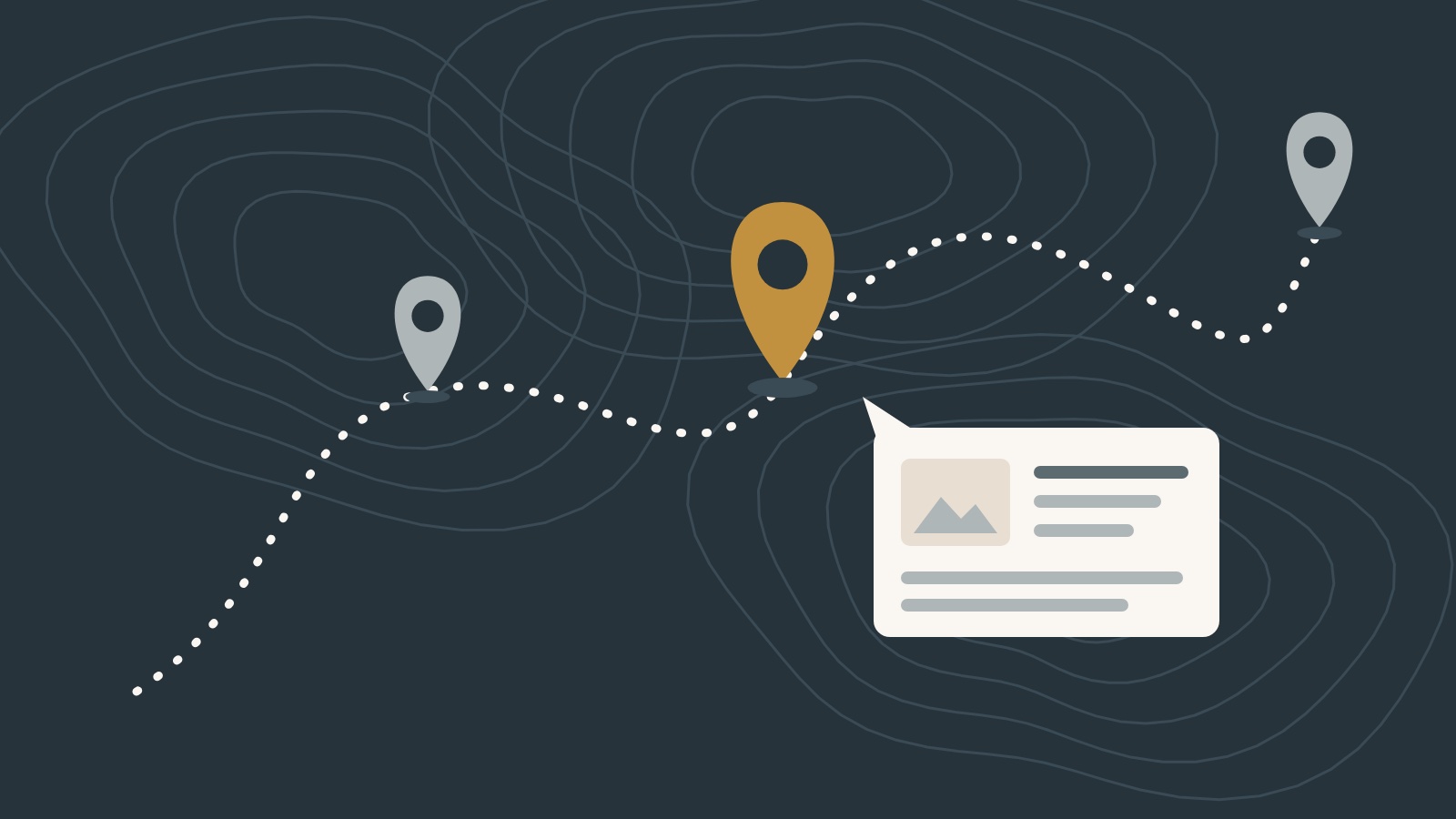
Most map apps will let you save a place with one tap. Months later the saved list is a field of stars and pins with no memory attached. Which one was the overlook? Who recommended the diner? Why this trailhead and not the one next to it? The location survived. The reason didn’t.
That gap is what I built Stations around, and Thanksgiving week seems like a good time to explain it. This is a week of going back: to a hometown, a kitchen, a walk the family takes every year. Those places matter because of what happens there and who comes along.
Three things that usually live in three apps
A map pin captures a location. A list captures a collection. A calendar captures a time. Planning a day out with other people means moving between all three, and somewhere in the copying and pasting the point of the outing gets lost.
So Stations has three objects:
- A station is a place with its meaning attached: context, images, comments and check-ins.
- A playlist groups stations into a guide for friends, for visitors, for a routine or for local discoveries.
- A journey puts places on a calendar, so the map and the plan agree.
Each one is a different question. Where is it and why does it matter? Which places belong together? When are we going?
Why hiking was the first example
The public example on the Stations site is hiking: trailheads, overlooks, coffee stops and memories collected into guides you can use. It is a good test because a day on a trail has all three parts. There are the places, the order that turns them into a day, and the date when everyone can go.
I am a La Crosse, Wisconsin native, and the bluffs there make it easy to have a favorite spot. What I want from a tool is a way to hand a favorite to someone else with the reason intact. Park here. Go in the morning. The second overlook is the better one. That kind of note is the difference between a pin and a recommendation.
A map is a way of seeing
I have been circling this idea for a long time. In 2011 I wrote about going from map blogger to map maker, after noticing that the spreadsheets, seating charts and network diagrams I kept making at work were all custom maps. Maps were the lens I used to understand things. Stations is that habit pointed at ordinary life.
It also connects to something I wrote this summer about helping people see what is already there and build enough structure to act on it. A list of places you love is already a kind of knowledge. It becomes useful to someone else when it has an order and a reason.
Something to try this week
You don’t need my app for this. Pick one place you will visit over the holiday that someone else in your life should know about. Write down three things: why it matters, when to go, and what to do first when you get there. Send it to one person.
That is a station. If you find yourself writing a second and a third, you have the start of a playlist.
If you want to see how the pieces fit together, Stations is open at stations.life, and my portfolio has the short case study.
The same question at work
I ask the same thing of business software. A customer list with no notes on why each contact matters is a field of pins. When someone wants a new tool, I start with what the information is for and who needs to act on it. The features come after.
That is how I scope a defined website or systems project at Market Jack, my consulting practice. My skills and services page describes the rest of the work. If you have something you want built or connected, tell me what it is for.